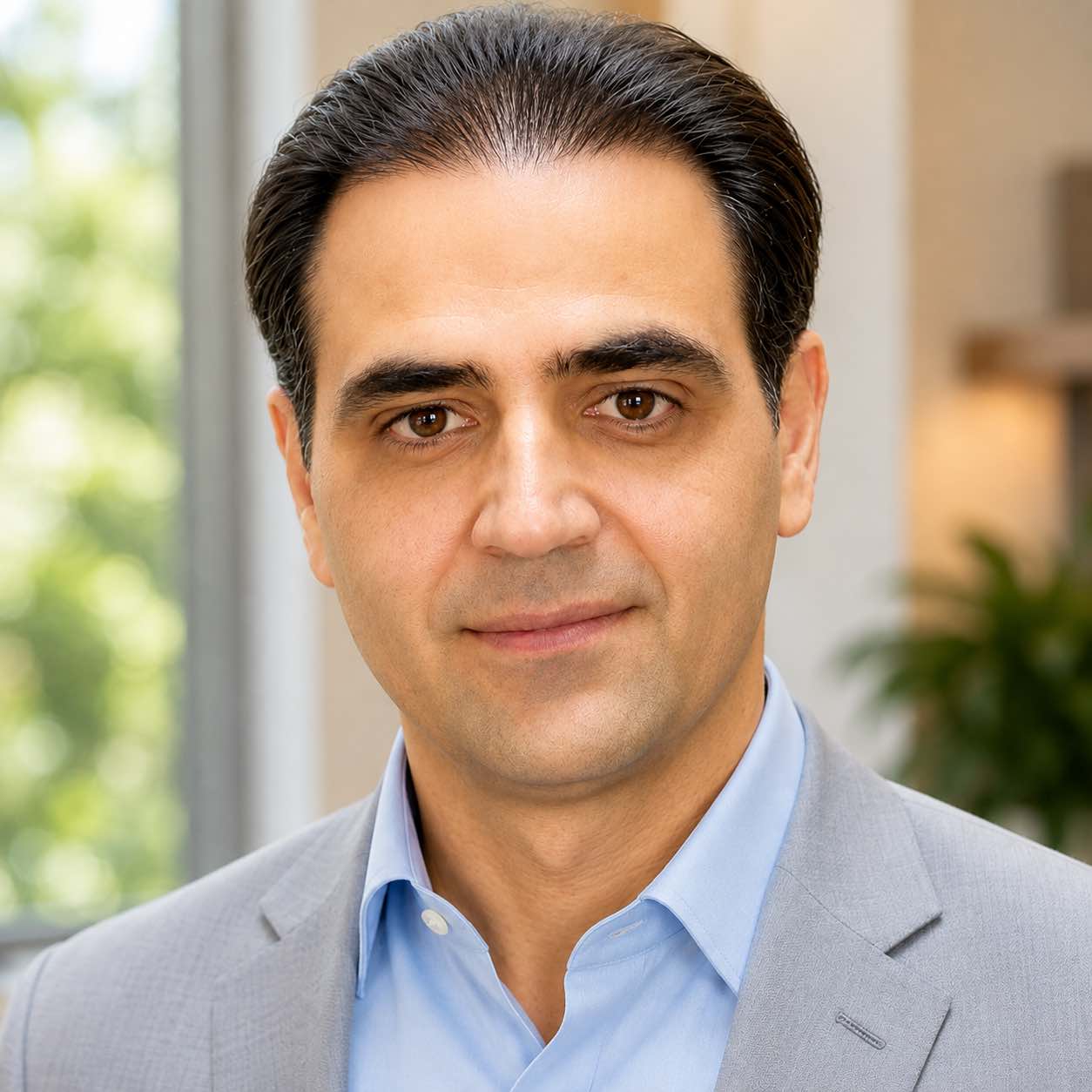
Hadi Hosseini, PhD
Associate Professor (Research) of Psychiatry and Behavioral Sciences, Stanford University
Principal Investigator, Computational Brain Research and Intervention (C-BRAIN) Lab
Hadi Hosseini is a computational/cognitive neuroscientist and Associate Professor of Psychiatry at Stanford University. He is one of the pioneers of connectome research in psychiatry and has published first reports of alterations in brain network organization in various neurodevelopmental, neurogenetic, and neurodegenerative disorders.
His current research involves using advanced AI and computational approaches, leading-edge neuroimaging techniques, biomarkers, and wearables to identify signature markers of brain disorders. His lab is also actively developing closed-loop, brain-based interventions for enhancing brain function in health and disease. Dr. Hosseini has been teaching the Neuroimaging Research Methods (Psyc250) at Stanford since 2012
Research
Computational Neuropsychiatry
Dr. Hosseini's lab studies alterations in the organization of the human connectome across neuropsychiatric and neurocognitive disorders using MRI, fMRI, diffusion imaging, functional near-infrared spectroscopy (fNIRS), network science, and multivariate computational approaches.
Biomarker Discovery in Aging and Alzheimer's Disease
His research also examines mechanisms, biomarkers, and predictors of Alzheimer's disease development and progression, with an emphasis on multimodal data and computational approaches for earlier and more precise characterization of Alzheimer's disease in preclinical stage.
Personalized Neurointervention
A central goal of Dr. Hosseini's work is to translate computational neuroscience into personalized interventions. This includes neuromonitoring-guided cognitive training and neurofeedback designed to engage individualized neural systems involved in executive function and working memory.
Precision Neuroimaging and Brain Biomarkers
The C-BRAIN Lab develops computational approaches for identifying brain-based markers that can improve characterization, prediction, and longitudinal monitoring of neurological and psychiatric conditions.